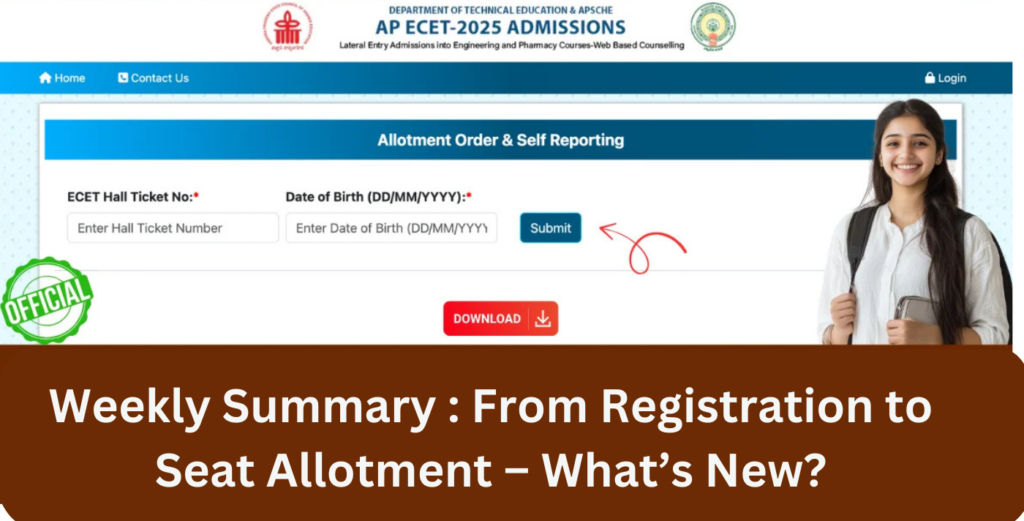
The AP ECET Weekly Summary is a crucial update for every candidate preparing for counselling and seat allotment. Since the admission process involves multiple stages such as registration, certificate verification, web options entry, and final seat confirmation, staying updated on a weekly basis becomes highly important. Moreover, as the schedule often undergoes changes due to administrative reasons or technical adjustments, a weekly briefing ensures that students never miss out on vital announcements.
In addition, this AP ECET Weekly Summary not only highlights the latest deadlines and official notifications but also provides insights into cutoff patterns, seat availability, and college preferences. Furthermore, it helps students understand what has changed during the week and what they should focus on in the upcoming days. By going through these weekly updates, aspirants can carefully plan their choices, avoid last-minute mistakes, and increase their chances of securing admission into a preferred college.
Ultimately, by combining timely information with useful guidance, the AP ECET Weekly Summary serves as a reliable guide for candidates, ensuring that they remain on track throughout the counselling journey.
Why the AP ECET 2025 Weekly Summary Matters
The counselling process of AP ECET 2025 is highly structured, and updates are released almost every day. However, with multiple notifications, students often struggle to track everything at once. This is where the AP ECET 2025 Weekly Summary plays a vital role—it consolidates all official announcements into a single, easy-to-follow report.
By following the AP ECET 2025 Weekly Summary, candidates can:
- Stay up-to-date with official notifications.
- Identify changes in deadlines or counselling schedules.
- Understand cutoff patterns and allotment rules.
- Prepare for upcoming phases without last-minute panic.
AP ECET 2025 Weekly Summary: Registration Phase
The counselling process begins with the registration phase, where candidates must log in to the official AP ECET portal and complete the payment of counselling fees. According to the AP ECET 2025 Weekly Summary, this stage saw thousands of students registering on the very first day.
However, there were a few challenges:
- Payment Gateway Delays – Many students reported delays during online fee payment. This was primarily due to heavy traffic on the website.
- Technical Errors – Some candidates faced login issues, which were later resolved after official intervention.
- Deadline Reminders – The AP ECET 2025 Weekly Summary highlighted that late registrations would not be entertained beyond the extended date.
Transitioning from registration, the next phase was equally crucial: document verification.
Document Verification Highlights
The document verification process ensures transparency and eligibility for all candidates. According to the AP ECET 2025 Weekly Summary, verification centers across Andhra Pradesh reported smooth proceedings overall, with only minor delays at select locations.
Key observations:
- Mandatory Certificates – Rank card, memo of marks, income certificate, caste certificate, and study certificate were compulsory.
- Category Verification – Students from reserved categories (SC, ST, BC, NCC, Sports, CAP, PH) had to provide additional documents.
- Regional Quotas – Local and non-local candidate status was carefully checked to avoid disputes during allotment.
The summary also mentioned that students who missed physical verification due to unavoidable reasons could request re-verification at designated centers.
Web Options Entry Updates
After the document verification process was completed, candidates moved on to the crucial stage of web options entry. This phase often becomes a turning point because the choices students make here directly influence their allotment results. During the week, several important developments were reported.
Key highlights included:
- Extended Deadlines – The initial timeline for web options entry was short; however, after several requests from students, authorities extended the deadline by two additional days.
- System Glitches – Some candidates faced issues while saving their preferences due to technical glitches, which were later resolved by the support teams.
- Guidance Sessions – To assist students, officials released help videos and instructions, ensuring that candidates could prioritize colleges more effectively.
Students were advised to carefully analyze cutoffs, placements, and available facilities before locking in their final preferences, as these decisions would significantly impact the admission outcome.
Seat Allotment Trends
The most anticipated stage of the process is seat allotment, and the first round revealed several clear patterns.
- Top Colleges Filled Quickly – Prestigious government and autonomous colleges saw seats occupied within the top rank ranges.
- Category-Specific Trends – General category students encountered higher cutoffs, while candidates from reserved categories had relatively broader opportunities.
- Regional Choices – A large section of students opted for colleges closer to their hometowns, indicating the importance of accessibility.
- Vacancies for Next Rounds – Despite high demand, many seats remained vacant, ensuring additional chances for students in later phases.
Candidates who did not secure their first-choice institution were reminded not to lose hope, as further rounds and spot allotments would provide more opportunities.
Schedule Changes
This week also brought noticeable adjustments in the counselling schedule.
- Extended Dates – Both registration and web option entry deadlines were stretched to accommodate technical issues.
- Flexible Verification – Extra slots were arranged for students who missed verification due to genuine reasons.
- Revised Allotment Date – The announcement of the first seat allotment was postponed by a day to process pending entries.
These changes highlight the importance of checking official updates frequently to avoid missing critical information.
Tips for Students
Authorities also shared useful advice to help students approach the process more strategically:
- Prioritize Colleges Wisely – Avoid random entries. Instead, review placement records, infrastructure, and previous cutoffs before making selections.
- Keep Backup Options – Even if aiming for top colleges, always list alternatives to safeguard against unexpected cutoff rises.
- Monitor Category Rules – Stay informed about reservation policies, including quotas for NCC, Sports, CAP, and PH candidates.
- Stay Updated – Missing even a single update can cost a seat, so daily monitoring of the official portal is essential.
- Be Prepared for Spot Rounds – Do not panic if you miss out in earlier allotments; spot rounds provide additional chances.
Common Mistakes Observed
Throughout the week, several avoidable mistakes were noticed among students:
- Delaying registration or web options entry until the last moment.
- Uploading incorrect documents, leading to delays during verification.
- Ignoring cutoff trends and making unrealistic college choices.
- Failing to check daily updates, which resulted in missed deadlines.
Avoiding these errors can make the entire counselling journey much smoother.
What’s Next?
Looking ahead, the next phase of counselling is expected to bring:
- Announcements for the second round of counselling.
- Publication of vacancy lists for transparency.
- Release of spot round schedules for students who still seek admission.
To prepare, students should organize documents in advance, track official notifications regularly, and stay ready for upcoming opportunities.
Final Thoughts
In summary, weekly updates serve as a reliable roadmap for candidates navigating the AP ECET 2025 counselling process. They provide timely clarity on registrations, document verification, web options, and allotment trends, helping students make informed choices at every step.
Since schedules and cutoffs often shift, following these updates reduces uncertainty and prevents unnecessary stress. More importantly, they guide students in planning strategically, avoiding mistakes, and maximizing their chances of securing a preferred college.
Ultimately, staying informed and proactive ensures a smoother admission journey, giving candidates the confidence to move forward and achieve their academic goals